Portfolio Strategy
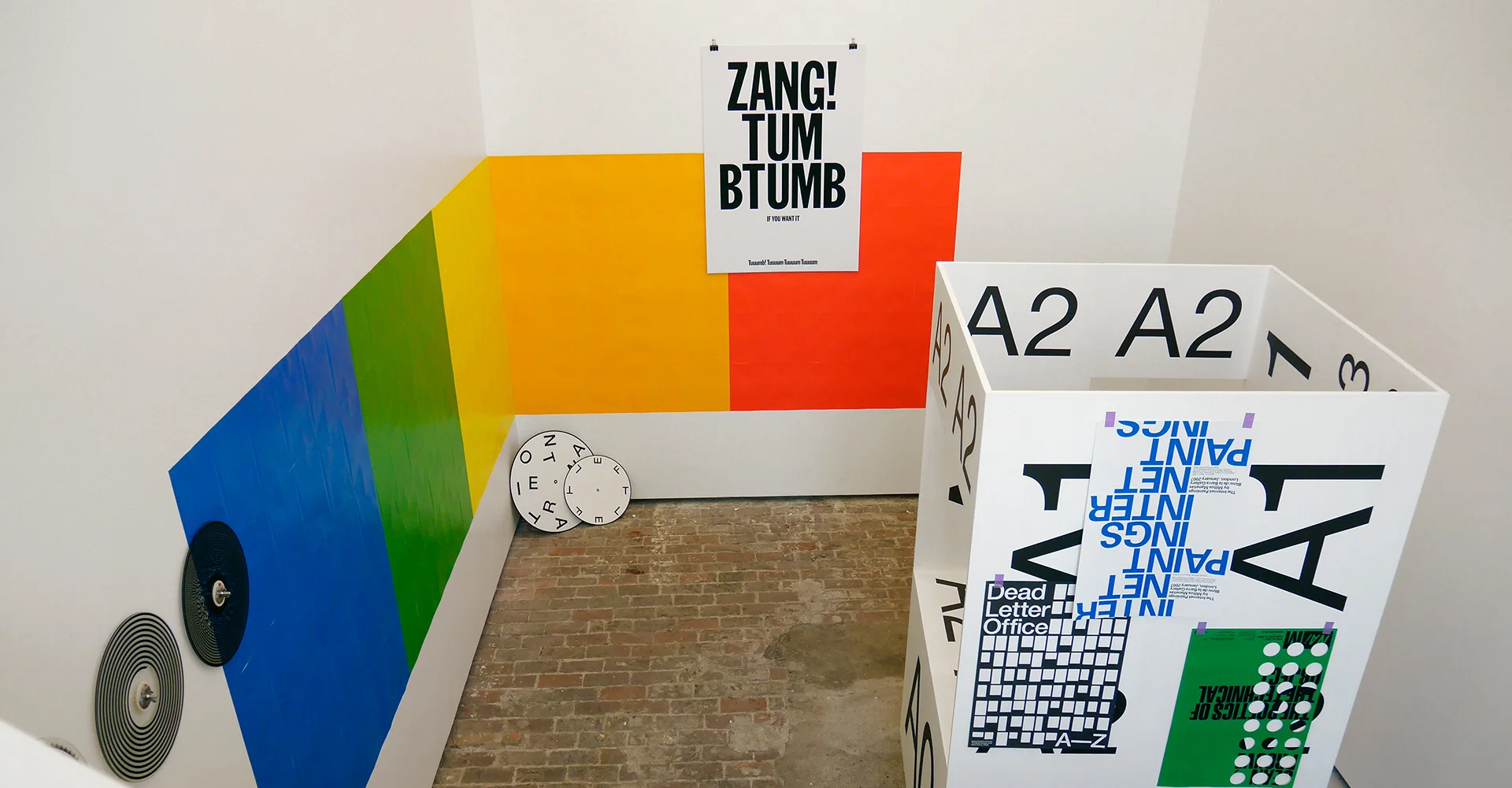
You know how people sometimes say that “the work should speak for itself”? We never really bought that phrase. The point is, we are quite traditional, old-school graphic designers. We design objects to function within very specific contexts. So the moment you present those objects within a totally different context, as flat digital images on a website, it’s only logical that you need some words to at least sketch the original context.
Added to that, we really enjoy ‘background information’. We love reading about artists and their methods, watching documentaries about the making of movies, listening to writers being interviewed on the radio. We like the idea that behind every artifact, behind every designed object or piece of art, there is a complete universe of ideas, references, stories. So we like to add to this ‘background genre’ by creating, on the internet, a small hidden gateway to our own micro-universe. We are not saying that everybody should read it, or like it; on the contrary, we really created our archive for the small group of people really interested in it.
Experimental Jetset in conversation with ISO50
Now that you've discussed your practice, analyzed your works, and surveyed our digial footprints, it's important to consider how we can take control of our narrative, share the information we want to communicate, and allow people into our own "micro-universes".
If there's time in class work in pairs or small groups and begin by discussing what is important to communicate, and how you can go about doing so, when trying to reach the audience you want to connect with.
Then, independently, develop 2 portfolio strategies you think will best accomplish these goals:
- Adding to the web portfolio you found for the Digital Footprint exercise, find 3 additional portfolios, or promo materials, in different mediums that field you like such as business cards, PDFs, merchandise, books etc. + any other web portfolios you enjoy (or instagram accounts, etc.). Try to have at least one of each references: Web Portfolio, PDF Portfolio, Book or Booklet, and Business Card.
- Analyze what you admire about these portfolios and materials. List their pros and cons, and what details make them noteworthy (interactions, cropping, editing of motion graphics, etc.)
- Based on your findings, create your own "moodboards" for two portfolio strategy directions. This should include visual references, color pallette, photography style, fonts and any other relevant information.
- Using your moodboards as starting points create "strategies" for your portfolio. An example may be: "Because I want to work in a small studio that designs brand experiences, I will make a simple 3d game online which acts as a "digital business card" that links to a more robust PDF portfolio.". Then, add specifics on how you will do this – choosing which platforms/software (Cargo, Framer, P5.js, etc.) you may use to carry out this vision. How you will organize your work, and which projects you will include.
Finalize 2 options for portfolio strategies, and format them as slide presentations. These proposals should include visual references – sketches, typefaces, screenshots/moodboard, and/or references of other portfolios. In particular, consider your business card, which is due when we get back from Chuseok on October 1.